
Understanding Polyvagal Theory: Why Your Body Reacts Before Your Mind
Have you ever found yourself feeling anxious, shut down, or overwhelmed—without fully understanding why?
You might tell yourself, “I should be calm” or “This isn’t a big deal,” yet your body doesn’t seem to agree.
That’s where Polyvagal Theory comes in.
Polyvagal Theory helps explain how our nervous system responds to safety, stress, and threat. Instead of seeing emotional reactions as weakness or failure, it reframes them as automatic survival responses designed to protect us.
What Is Polyvagal Theory?
Polyvagal Theory focuses on how the autonomic nervous system constantly scans the environment for cues of safety or danger. This process happens automatically—often before we consciously think about it.
When safety is detected, the body supports calm, connection, and engagement.
When danger is detected, the body shifts into survival mode.
This is not a choice. It’s biology.

The Three Nervous System States
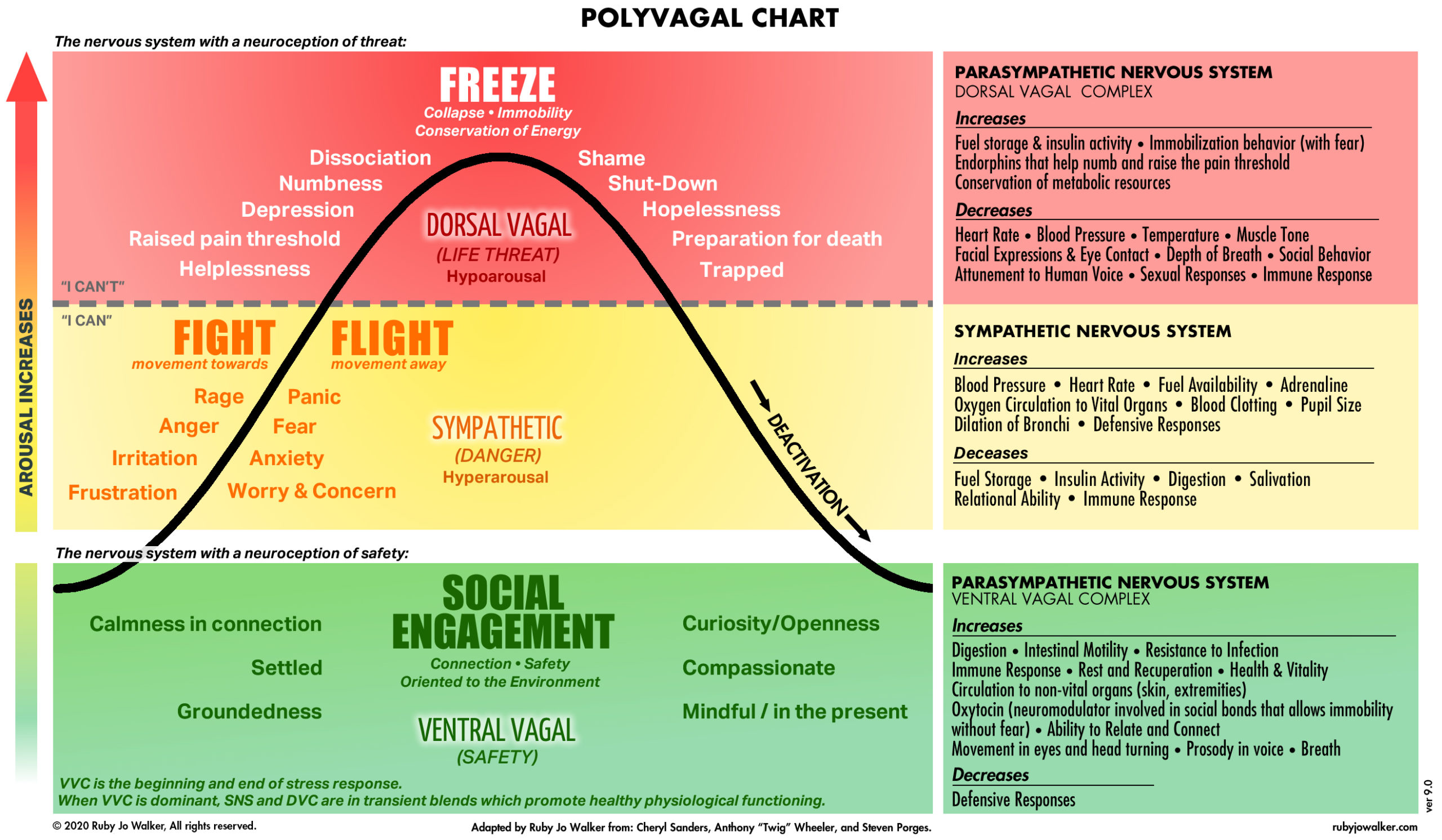
Polyvagal Theory describes three primary states that influence how we think, feel, and behave.
🌿 Safe & Connected
When the nervous system feels safe:
- You feel calm and present
- Social connection feels easier
- You can think clearly and problem-solve
This is the state where healing, growth, and connection happen most naturally.
⚡ Fight or Flight
When the nervous system detects threat:
- Anxiety, panic, irritability, or anger may appear
- The body prepares to act or escape
- Focus narrows to survival
This state is helpful in true danger but exhausting when it stays activated too long.
❄️ Shutdown
When threat feels overwhelming or inescapable:
- Numbness, fatigue, or dissociation may occur
- Motivation and energy drop
- The body conserves energy to survive
This isn’t giving up—it’s the nervous system protecting itself.

Why This Matters in Therapy
Understanding Polyvagal Theory can be deeply validating for clients. It shifts the question from
“What’s wrong with me?”
to
“What is my nervous system responding to?”
A Polyvagal-informed approach in therapy can help you:
- Recognize your nervous system states
- Reduce shame around emotional reactions
- Learn body-based regulation tools
- Increase a sense of safety and connection
- Build resilience over time
Rather than forcing calm, therapy focuses on creating safety—because regulation follows safety, not the other way around.

Healing Starts With Safety
Your reactions make sense in the context of your experiences.
Your nervous system learned what it needed to survive.
Healing doesn’t mean eliminating stress responses—it means learning how to gently guide your nervous system back toward safety, connection, and balance.
And that process happens one regulated moment at a time.
